
THE PROJECT
The Story Behind the Project
Collecting images for The Rift project began over two decades ago — an undertaking to capture Africa’s most extraordinary feature through art, science and photography.
From the volcanoes of Ethiopia to the Zambezi River this journey celebrates the landscapes that shaped humankind, prompted the largest mammal abundance on the planet and harbours multiple cultures.
What began as a photographer’s vision became a global collaboration to celebrate , educate and help protect one of Earth’s most vital regions.


Why The Rift Matters
The Great Rift Valley of Africa is unique: it hosts spectacular wildlife migrations, towering volcanoes, diverse cultures, vast lakes and mountains, and the most significant traces of our human origins.
In the 1930s, American photographers like Ansel Adams helped protect wilderness through their imagery — a reminder of how powerful visuals can shape awareness and conservation.
The Rift is a sanctuary for both nature and people, where remote communities and thriving wildlife coexist alongside urban populations. Its dramatic contrasts and rich history are irreplaceable.
This project highlights both its beauty and the challenges it faces, from environmental pressures to food scarcity. The essays and images book celebrate this extraordinary region while emphasizing its protection.
This project elevates the Rift from a geological feature, to a symbol of Africa’s identity, reminding us of the legacy it has provided for millions of years — and the responsibility we share to treasure it.
The Book
Large format | 32,5cm x 29cm | 350 Signed Collector's Editions | 3,000 Standard Editions


"If this remarkable book can allow others to walk in the shoes of the people of the greater Rift Valley, to guide them to understand that they, the current inhabitants of the Rift Valley are the masters best able to continue this extraordinary heritage"
Valerie Browning AM
Who We Are
Producing a comprehensive book project on the Rift valley is a large undertaking. By incorporating contributors who are global experts in their fields, the Rift grew into an incredible repository of important narratives. The contributors imparted distinct individual expertise which together with Shem Compion’s striking and compelling imagery, has resulted to create this one-of-a-kind project which has never been attempted before.
Contributors & Authors

Marc Stalmans
Ecologist
is the Director of Science for the Gorongosa National Park, and leads the research programme. He is an ecologist with experience in conservation research, planning and management who has been involved in public, parastatal and private projects across Africa countries and the Middle East, as well some international projects of the IUCN in Asia and Europe. Stalmans is an agricultural engineer (specialised in Forestry and Limnology), has a Postgraduate Certificate in Tropical Animal Health and Production, and holds a MSc in Botany and a PhD in Landscape Ecology.

Stefanie Lang
Executive Director of LLF
is the executive director for the Legacy Landscapes Fund (LLF), a pioneering foundation based in Berlin, providing long-term financing by combining public and private funding into a delivery model for long-term financial security. LLF emphasises flexibility by agreeing on overarching goals and allowing for more flexible annual planning in landscapes across southern America, Asia and in Africa. Lang has an MA degree in social anthropology from the University of Cologne, as well as an MA in leadership and organisational development.

Donald Johanson
Paleoanthropologists
is considered one of the most influential paleoanthropologists of our time since his groundbreaking discovery in 1974 of the 3.2-milion-year-old hominid skeleton popularly known as Lucy. For over 50 years he has led field expeditions in Ethiopia, Tanzania and the Middle East. His best-selling books, including Lucy: The Beginnings of Humankind, which won the 1982 National Book Award in Science, and his Emmy-nominated three-part PBS series, In Search of Human Origins, have generated three generations of Lucy fans. Johanson founded the Institute of Human Origins, a human-evolution think tank at Arizona State University. He is an honorary board member of the Explorers Club and a fellow of the Royal Geographical Society, and also serves as the Virginia M Ullman Chair in Human Origins at Arizona State University, where he teaches, and is the recipient of numerous international prizes and awards. In 2021, NASA launched a spacecraft named Lucy after Johanson’s famous discovery, with the goal to collect information about the Trojan asteroids.

Nicholas O. Mariita
Geophysicist
is a geophysicist working as a senior lecturer at Kenya’s Dedan Kimathi University of Technology. He has worked as a research scientist at Kenya’s Ministry of Energy and the Kenya Electricity Generating Company (KenGen) Geothermal Division. As a director of Geothermal Training and Research Institute (GeTRI) at Dedan Kimathi University of Technology, he established collaborative agreements with Kenyan geothermal industries and Kenyan and foreign universities to provide long-term support and training opportunities for students and staff.

Daudi Peterson
Founder of Dorobo Fund for Tanzania
is a co-founder of Dorobo Safaris, alongside his brothers Mike and Thad, who grew up in Tanzania. Peterson has carried out pioneering studies of wildlife distributions in the pastoralist landscape of the Maasai Steppe during the 1970s. He first encountered the Hadza in the late 1950s while attending boarding school on the Iramba plateau near Hadzaland. The brothers established the Dorobo Fund which supports and funds many grassroots efforts that promote social, ecological and economical sustainable growth in Tanzania (www.dorobofund.org). These initiatives are carried out by the Ujamaa Community Resource team. Advocacy for the land rights of Maasai and Datoga pastoralists and Akie and Hadza hunter-gatherers has been core to this work. Working together with the Hadza, he produced the book Hadzabe: By the Light of a Million Fires (2013) with Richard Baalow and Jon Cox, Mkuki na Nyota Publishers Ltd, Dar es Salaam.

Carla Handley
PhD, MPhil, BA Anthropologist
is a field anthropologist and research associate at Arizona State University’s School of Human Evolution and Social Change. She has focused on working with and for local indigenous communities and much of this work has been carried out among the Rendille, Borana, Samburu and Turkana pastoralists of northern Kenya. Her research investigates cultural and socio-ecological determinants of conflict and is interested in understanding the role humans play in shaping and being shaped by the natural environment, limitations in adapting to ecological disturbances, and mechanisms for strengthening resilience.

Manuel Domínguez-Rodrigo
Professor & Co-director
is co-director of the Institute of Evolution in Africa (IDEA), University of Alcalá, Madrid, Spain, and Professor of Biological Anthropology (Skeletal Biology), Department of Anthropology, Rice University, Houston, USA. He has been co-director of the paleoanthropological projects of Peninj (Lake Natron), Eyasi and, currently, of the Olduvai Paleoanthropology and Paleoecology Project. He has participated as a guest researcher in the projects of Gona (Ethiopia) and Swartkrans (South Africa). He has published 10 books and more than 300 impact articles. His specialties are taphonomy and paleoanthropology and he is a pioneer in the application of high-computing tools, such as algorithms of ‘machine learning’ and ‘deep learning’ and ‘computer vision’ in the world of paleoanthropology.

David Pyle
Volcanologist
is a volcanologist who works in the volcanic regions of Chile, Ethiopia and Greece. His current projects include the Strengthening Resilience in Volcanic Areas (STREVA) project. He is a Professor of Earth Sciences and Fellow of St Anne's College. In 2017 he was appointed the first Academic Champion for Public Engagement with Research (PER) within the Mathematical, Physical and Life Sciences Division at the University of Oxford.

Tristan McConnell
Writer
is a writer and foreign correspondent who studied anthropology before becoming a journalist. His essays and reporting have appeared in National Geographic, The New Yorker, GQ and the London Review of Books, among others. The essays and photo narratives are extracted from the following essays: ‘The Whale in the Desert: Tracing Paths of Migration of Turkana’, originally published in full in The Emergence magazine in December 2021; ‘The Rift’, published in full in Aeon in January 2023; and ‘Illuminating Kirinyaga: Meaning and Knowing in Mount Kenya’s Forests’, published in Emergence magazine in October 2020.

Sileshi Semaw
Senior Research Scientist
is a senior research scientist National Research Centre for Human Evolution (CENIEH), in Burgos, Spain. He received his PhD in Anthropology from Rutgers University in and has worked as a research scientist at the Stone Age Institute, Indiana University. Semaw is co-director of the Gona Paleoanthropological Research Project, and is leading an international multidisciplinary field excavation in Ethiopia. Dr Semaw wishes to acknowledge the colleagues who have been part of this personal and professional journey over the years, including Mr Girma Yilma, then Minister of Culture, who issued the first permit for fieldwork in Gona; Professor Tim White and Dr Berhane Asfaw who welcomed him at National Museum of Ethiopia; Professor JWK Harris, who has worked at Koobi Fora in East Turkana, Kenya; and Professor Mike Rogers and Jay Quade and the rest of the fieldwork teams over the years. Special gratitude to Asahmed, Habib and the community of Afar guides and friends.

Veronica Waweru
Lecturer
is a lecturer and the director of undergraduate studies at the Council on African Studies at the MacMillan Center, Yale. She has a PhD from the University of Connecticut with a focus on prehistoric projectile technology in East Africa. She did her postdoctoral studies at Stony Brook University and served as field school director at the Turkana Basin Institute. At Yale, Dr Waweru’s recent work highlights prehistoric technological adaptations in high-altitude, non-basinal settings in Mau Narok and the Central Highlands of Kenya. In addition, she investigates the social impacts of Darwinian human origins science on communities in Africa where prehistoric research has been carried out. The social dimensions of Darwinian evolution she studies include the Cradle Paradox, alienation of locals from products of prehistory research, skin bleaching, the social value of ancient heritage, and knowledge co-production.
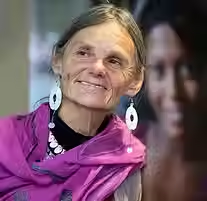
Valerie Browning AM
Australian Nurse
is an Australian nurse who has lived among the Afar nomads in Ethiopia for decades. With her Afar husband, Ismael Ali Gardo, she set up the Afar Pastoral Development Association (APDA). She is the author of Maalika: My life among the Afar nomads of Africa.

Sheniz Janmohamed
Poet
is a poet, artist educator and land artist who has performed her work around the world, including the Jaipur Literature Festival, Alliance Franáaise de Nairobi and the Aga Khan Museum. She focuses on fostering community through collaboration, compassion and creativity. In her own practice, she strives to embody words through performance, land art and writing in the ghazal form. Sheniz is the author of two collections of poetry: BLEEDING LIGHT (Mawenzi House, 2010) and FIRESMOKE (Mawenzi House, 2014).

Ngwatilo Mawiyoo
Multi-award Nominated Author
is the multi-award nominated author of two poetry collections, blue mothertongue and Dagoretti Corner. A regular guest at local and international literary festivals, her poems appear in esteemed literary magazines around the world. In 2021, Ngwatilo made her debut as a writer/director with the short film Joy’s Garden, which was well received on the festival circuit. She went on to write Inheritance (2024), an award-winning trilingual magical realism short. Ngwatilo holds an MFA in Creative Writing from the University of British Columbia.

Anthony Collins
Director of Baboon Research
is the Director of Baboon Research at Dr. Jane Goodall’s Gombe Stream Research Center on the shores of Lake Tanganyika in Tanzania. Dr. Collins has dedicated his career to studying the intricate lives of baboons. This work plays a vital role in understanding the delicate balance of Gombe’s ecosystem and contributes to the broader mission of conservation science and our knowledge of primate behaviour, family dynamics and the challenges they face due to habitat loss and climate change. He is deeply involved in the Jane Goodall Foundation’s community-centered conservation programme, TACARE, and its global humanitarian and environmental programme for young people, Roots & Shoots.

Jonathan and Angela Scott
Wildlife Photographers & Authors
are award-winning wildlife photographers and authors. They have both won the Overall Award in the prestigious Wildlife Photographer of the Year Competition. They have written and illustrated 34 books including their award-winning children’s titles for Collins Big Cat as well as The Big Cat Man: An Autobiography (Bradt) and Sacred Nature: Life’s Eternal Dance (HPH). They worked on the popular TV series Big Cat Diary, with Jonathan as co-presenter and Angela as Production Stills Photographer and game spotter. They have been based in Maasai Mara since the late 1970s.

Jon Abbink
Anthropologist-historian
is an anthropologist-historian and carries out research on the history and cultures of the Horn of Africa (northeast Africa), particularly Ethiopia. He has served as Professor (extraordinary) of African Ethnic Studies at the Vrije Universiteit (VU) in Amsterdam and is currently a Professor Emeritus of Politics and Governance in Africa at Leiden University. His research focuses on the sociocultural history of South Ethiopia, on the historical-cultural study of the relation between governance, political culture and religious discourse. He is one of two external ethnographers who have spent over 30 years working in the Omo Valley region and specifically in the remote Suri region.

Lydia Olaka
Senior Lecturer
is a senior lecturer at the Technical University of Kenya, Department of Physics, Earth and Environmental Science. She is a geologist specialising in Earth system science and focusing on paleoclimate reconstruction, climate change adaptation and mitigation, geochemistry, groundwater flow and dynamics, and carbon mitigation solutions. She was named by Kenya’s National Research Fund (NRF) outstanding Woman Researcher in the Physical Sciences, Technology and Innovation sector in August 2024.

Ian McCallum
Psychiatrist
is a psychiatrist, analytical psychologist and a specialist wilderness guide. A former rugby Springbok, he is director of the Wilderness Foundation, a trustee of the Cape Leopard Trust and the author of multiple publications, including two anthologies of wilderness poems, Wild Gifts (1999) and Untamed (2012), and a book, Ecological Intelligence: Rediscovering Ourselves in Nature.

Stephanie Sluka
Development & Conservation Specialist
is a development and conservation specialist, working across Africa as a consulting partner of the Tatu Collective. She is also a co-founder of Arete Arts Foundation which works with contemporary artists, conservationists and change makers to deepen discourse on humanity’s relationship with the natural world. As project co-ordinator to The Rift, Stephanie was instumental in bringing the Rift project to life.

Elsa Bussière
Conservation Ecologist
is a conservation ecologist working across Africa, holding a PhD in biological sciences from the University of Cape Town. She has conducted wildlife research across Southern Africa and played a key coordination role in the 2022 Elephant Survey in the Kavango–Zambezi Transfrontier Conservation Area (KAZA), comprehensively covering the Okavango Delta. Her conservation work includes leading an ostrich reintroduction in the Sahara in Central Africa. As a nature writer, Elsa treasures nights spent sleeping under the stars, surrounded by the scents and sounds of nature, bringing a lyrical balance to the rational and objective nature of her scientific work.

Shem Compion is a South African photographer, filmmaker and naturalist whose work has taken him
from volcanic peaks to remote wildlife hides across Africa. As co-founder and managing director of C4 Photo Safaris, he leads photographic expeditions into the continent’s wildest corners. His innovative underground hides have drawn global acclaim, offering rare eye-level views of elephants and birds.
Shem says, “For most people, the Rift Valley is an abstraction, but I hope this landmark book, with its imagery and essays, brings a tangible way of celebrating, educating, commemorating and highlighting the significant history of the Rift, its present and the future.”
Shem’s images have featured in top international competitions and major productions, including BBC Planet Earth and Tales by Light on Netflix. He co-produced the documentary Zero to Zero, capturing South Africa’s Covid-19 story, and has published seven books. A Fellow of the Royal Geographical Society, Shem continues to push creative boundaries in nature photography.
Shem Compion


